
Most people know the name of their insurance agency. Far fewer could tell you the name of the person who handles their renewal, or who to ask when a policy question comes up on a Tuesday afternoon.
That seems like the wrong way around, because the person is usually what makes the difference. An agency is a building and a phone number. The coverage you end up with depends on who sat down with you and what they bothered to explain.
So we put a camera in the office and asked each member of the team the same kinds of questions. What do you handle. What do clients get wrong. What should somebody ask before they sign. Here is who works here, in their own words.
Courtney McCutchen, Principal

Courtney runs Texas Select. He grew up in Mertzon, went to Angelo State, and has spent twenty-two years in insurance, most of it on the commercial side with small, medium, and large businesses.
His way of framing a coverage decision is the one worth borrowing. There are two numbers in any policy. The first is what you pay for it, which you see every month. The second is what you pay when there is a claim, which you do not see until you are already in it. Those two pull against each other, and optimizing for the premium is a legitimate business decision as long as you know you are making it. What he runs into is people making that choice by accident, because nobody ever laid out the second number.
When commercial clients bring their existing policies in for a review, what surprises them is rarely the price. It is finding coverages they assumed they had and did not. A fair number of those gaps can be closed for little or no additional cost, because the issue was never budget. Nobody had shopped the account properly.
He is also why the agency has a real service department, and he still talks with clients personally most days.
Away from the office, Courtney flies a small airplane, keeps a fishing camp on the Devils River, and spends most weekends outdoors with his wife Heather and their twin boys.
Sharon Moore, Commercial Renewals

If you own a business insured through Texas Select, Sharon is likely the person who knows your file and picks up when the renewal paperwork shows up. She is a San Angelo native who moved back home after her husband passed away, and she was one of the first hires when Courtney started the agency. She had known the family for years.
Two things she explains constantly are worth knowing in advance. Surplus commercial policies do not roll over quietly. They get reviewed and rewritten every year, with new paperwork and new premiums, and if you finance your premium, a renewal means a new down payment. Knowing that turns the renewal from a surprise into a normal step.
The second is the year-end audit. Many commercial policies are priced on the sales you estimated at the start of the term, so if you estimate low and then have a strong year, the audit can arrive with a sizable bill. Her advice is to estimate honestly, and if sales climb well past the projection, report it midterm so it gets accounted for along the way.
She will also talk through whether a claim is worth filing at all, since a claim can stay on your file for about five years and affect what you pay.
Outside the office she has two grown sons, two granddaughters, and two dogs named Rowdy and Coors. She reads, and she travels somewhere new whenever she gets the chance.
Jansen Morris, Commercial Insurance Agent

Jansen handles commercial general liability, property, and auto, which covers most of what a working business needs. He grew up in Sonora and spent ten years in restaurant management before insurance, so restaurant owners tend to find him quickly.
The gap he runs into most is owners who bought a price instead of a policy. The limits looked familiar, the number was livable, the paperwork got signed, and afterward nobody can say how that coverage applies to their specific operation. He is quick to say that is not the owner’s failing. Before he worked in the industry, he says insurance may as well have been another language to him.
The question he wishes more people asked is about the inspection. Plenty of commercial policies involve one, and owners routinely do not know it is coming or what the inspector will be looking at. Told about it in advance, inspection day is uneventful.
Two things tend to surprise new clients. One is that a real person answers the phone. The other is how many discounts exist on the commercial side, tied to prior insurance history and what the industry calls an insurance score. Most people never ask, because they do not know there is anything to ask about.
Outside the office he is in the water when he can be, walking or hiking when he cannot, and he recently joined a co-ed intramural softball league in San Angelo.
Nancy Belcher, Commercial Property and Contractors
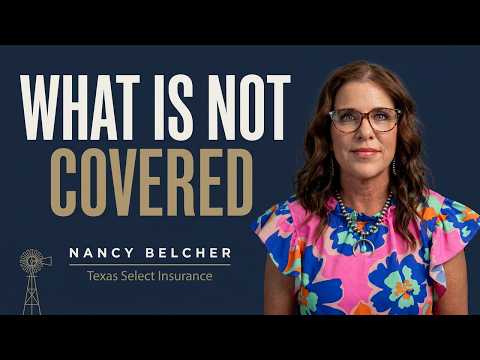
Nancy works commercial property and contractor accounts, including the ones other agencies call difficult: vacant buildings, rental portfolios, habitational risks, construction operations.
Her central point is that two quotes with similar premiums can be very different products. Coverage wording, exclusions, valuation method, and liability endorsements all vary between policies that look interchangeable on a summary sheet, and none of that registers until there is a claim. A lower premium can mean a higher deductible, a meaningful exclusion, or limits that will not go the distance.
On the property side, the issue she finds most often is a building insured below what it would now cost to rebuild. The number made sense at some point and construction costs moved. She also watches wind, hail, water damage, and vacancy, which West Texas property owners have reason to think about. Vacancy is the one people learn about at the worst possible moment, because a building sitting empty between tenants can be treated differently by a policy than an occupied one.
For contractors, the recurring gaps are subcontractor work, completed operations, and the specific requirements written into a contract. Completed operations is the one contractors have usually never considered. The job is finished, the crew is gone, the invoice is paid, and the exposure is still out there.
She came to commercial insurance after more than twenty years in medical insurance. She is from Alpine, went to Texas Tech, and spends most weekends driving her two kids from one rodeo to the next.
Jimmy Moore, Commercial Account Manager

Jimmy is the person who gets an approved policy across the line. Documents out for signature, payment links sent, certificates of insurance issued, policy information entered so the coverage is active and accurate.
That step is easy to underestimate. Approval and binding are two different things. A policy usually is not bound until every required document and payment is complete, and putting the paperwork off after the good news can push your effective date back or leave a gap right where you assumed you were covered. Once you are approved, treat the signatures like they matter.
The other thing he warns business owners about is how often they will need a certificate of insurance. Signing a contract, leasing a building, or picking up a new customer can each trigger a request for proof of coverage, and it comes up more than most people plan for. The agency issues them every day, so a fast turnaround is usually one phone call.
He moved to San Angelo in 2018 for a computer science degree at Angelo State and started out in real estate before insurance. After a day spent getting policies bound, he is happy to go home to a movie or a video game.
Sarah Knox, Farm and Ranch Account Executive

Sarah works with families, business owners, and farm and ranch clients across Texas, covering personal policies, renewals, audits, and the changes that come with a growing operation.
Ask what she is known for and she talks about communication before she talks about coverage. Insurance is full of terms and fine print that are easy to put off and hard to decode, and what her clients tell her they value is knowing somebody is staying on top of the details and keeping them informed.
The misstep she sees most is shopping only for the lowest premium. Wanting to save money makes complete sense. The catch is that the lowest price usually buys minimum coverage, and plenty of people do not find out how thin that is until they need it. The way she reframes it is worth repeating: insurance is less about meeting a requirement than about protecting yourself from a loss that could follow your family for years.
She also thinks the most useful question anybody can ask before buying is what the policy does not cover. Most people study what is included. The exclusions are the half that decides how a claim goes.
Outside the office she is a mom of two, usually at a softball or tennis game, and otherwise playing pickleball, rereading Harry Potter, or walking a yorkie named Stitch.
D’Anna Garza, Personal Lines Account Executive

D’Anna oversees personal lines, which means home, auto, and most of what a family carries without thinking about it much. She spent nearly eleven years in workers’ compensation in Austin and three years managing an auto insurance agency here in San Angelo before taking the role.
What she says surprises clients most is plain enough: not everything is automatically covered under a homeowner’s or auto policy. People assume coverage is broader than it is, and the details that decide a claim tend to live in the parts nobody reads closely. Her fix is unglamorous. Look at your coverage every so often and check that it still matches the life you have now.
The question she wishes people asked is quieter than most. If I had a claim tomorrow, would I understand what my policy covers? It moves your attention off the price and onto what the policy would do for you.
She is drawn to the clients other people might rush, the ones who feel overwhelmed by the process or are not sure they have the right protection in place. She listens, answers the questions people are a little embarrassed to ask, and does not let anybody off the phone still uncomfortable.
She moved home to San Angelo to be near the grandparents who raised her, and her grandfather is eighty-four now. Before insurance she spent eight years on air in Austin radio, and she still writes and records music in a home studio.
Jason Geske, Insurance Advisor

Jason works farm and ranch alongside business insurance, including commercial property, general liability, and commercial auto. He was a captive agent with Farm Bureau for years before Texas Select, which meant one company’s products and one set of answers.
The mistake he names first has nothing to do with which coverage somebody bought. It is the distance between owning a policy and understanding one. Somebody explained it once at signing, the paperwork went into a drawer, and the details went fuzzy. That is not a character flaw. It is what happens to documents you hope you never need.
The detail that produces the most recognition in a policy review is the difference between replacement cost and actual cash value on a building. Replacement cost is what it takes to rebuild. Actual cash value subtracts depreciation for age and wear, and the payout can land well under what a rebuild would run.
He also wants people to know their deductible in dollars rather than in percentages before they sign. In West Texas the roof is what gets claimed, and a 5 percent deductible on a home can work out to twenty or forty thousand out of pocket. Premium and deductible move against each other, so when somebody asks for the cheapest policy available, that is usually where the savings came from.
One more thing worth knowing before you ever need it. When a claim is filed, the agent is removed from the claims process by design. The carrier assigns an adjuster, and the adjuster is the one who contacts you, usually within 24 to 48 hours, and the one holding the answers about what is covered.
Jason lives in Sonora with his wife and son, and most of his free time outside of his son’s sports is spent on the water.
Come find whoever you need
Every one of these conversations happened in the office at 502 S Koenigheim in San Angelo. If one of them raised a question about your own coverage, that is the kind of call the team is glad to take, whether or not anything changes afterward.
The office number is (325) 777-1772. Bring the policy you already have. The comparison is usually the point.